
207 – Why Postliberalism Failed with James Patterson and Thomas Howes


Patrick Deneen’s 2018 book, Why Liberalism Failed, was by the standards of most academic works of political philosophy, wildly successful. It struck a chord with some of the broader Right and gave a voice to a growing movement skeptical of the promises of classical liberalism and looking for an alternative. This burgeoning New Right, however, is anything but new. The kind of postliberalism often advocated by the New Right has been attempted in nations across Europe and South America. And each time it has been tried, it has failed.
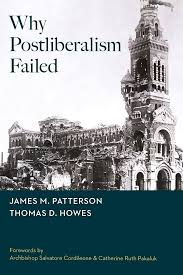
Joining Saving Elephants host Josh Lewis is James Patterson and Thomas Howes to talk about their new book, Why Postliberalism Failed. The trio unpackage the wild, conspiratorial, and gruesome history of postliberal regimes of the past and explore what it might tell us about how similar efforts might play out today.
About James Patterson
James M. Patterson, Ph.D. is an associate professor of politics at Ave Maria University. He received his B.A. in Political Science and Media Studies at the University of Houston in 2002 and his Ph.D. in American Politics from the University of Virginia in 2012. His areas of research include race, religion, and American political development. He has held research positions at the Program for American Values and Institutions at Duke University and the James Madison Program in American Ideals and Institutions at Princeton University, as well as teaching positions at Hampden-Sydney College and Gettysburg College.
He has published academic research in Perspectives in Political Science, American Political Thought, Anamnesis, and Journal of Church and State. He has published more popular essays and book reviews for Modern Age, Society, Library of Law and Liberty, and Public Discourse.
About Thomas Howes
Thomas Howes is currently a Lecturer in the University Center for Human Values at Princeton University. He has a PhD in philosophy at Catholic University of America. He is also a member of the James Madison Society at Princeton University.
He has a healthy and general curiosity, but his academic emphases are in the fields of Thomistic virtue ethics and natural law theory, political ethics, political philosophy, political economy, and the philosophy of religion. His dissertation was a political-ethical defense of religious liberty.
He is also happily married with two daughters.



Comments